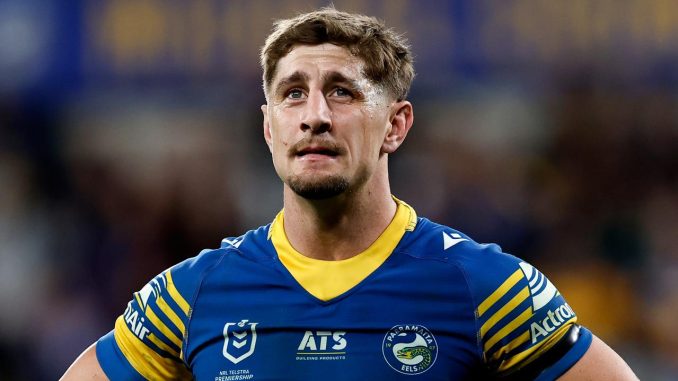
“Neither Code Covered Itself in Glory” – Zac Lomax’s Code Switch Leaves League and Union Looking Flawed
SYDNEY, Australia – Rugby league and rugby union have both emerged with little credit from the Zac Lomax code switch saga this week, with league figures reacting defensively to the new recruit’s description of union as a “truly international sport”, while rugby’s red carpet treatment for the NRL star has raised questions about its confidence in homegrown talent – despite hosting the Rugby World Cup next year.
The juxtaposition of Lomax’s high-profile signing with the promotion of young Waratahs players Sid Harvey and Jimmy Hendren into Saturday’s starting side against the Reds in Brisbane has highlighted a stark divide in how the two sports approach talent development and recruitment. While Lomax arrives with fanfare and significant financial investment, Harvey, 21, and Hendren, 23, have worked their way through rugby’s pathways system with minimal fanfare – a fact that is understood to have left those involved in their development frustrated.
“Somewhere in Australia, the coaches and scouts who identified and nurtured Harvey and Hendren likely rolled their eyes at the attention lavished on Lomax,” one rugby development source said. “They do this work for the love of the game, not for headlines or big budgets, but a little recognition for their efforts – and for the young players they’ve shaped – would be welcome.”
In truth, Lomax’s recruitment looks like a solution to a problem that does not exist. Rugby has demonstrated its ability to produce elite outside backs in recent years, with Max Jorgensen already establishing himself at international level, while the Pritchard brothers – Kadin at the Reds and Trayvon at the Brumbies – are emerging as genuine talents. Kadin has been likened to a young Tevita Kuridrani, while Trayvon’s ability to keep play alive was pivotal to the Reds’ win in Canberra last weekend.
It could be argued that strategic recruitment from the NRL and investment in homegrown talent are separate issues that need not conflict. However, this nuance was lost when Rugby Australia’s chief executive held a formal press conference to announce Lomax’s signing – a move that overshadowed the achievements of emerging players, even as the newcomer himself admitted he was “at the bottom of the mountain” when it came to mastering his new sport.
That statement may have been the most honest of the week. Judging whether NRL players will succeed in union involves significant guesswork, as the sports’ differences far outweigh their similarities. Watching high volumes of rugby followed by league footage highlights stark contrasts – most notably the vast acres of space available in league that simply do not exist in union, where possession is constantly contested and offside lines are vastly different.
In sport, space equals time – time to make decisions and execute skills. This fundamental difference means detailed assessments of NRL players’ potential in rugby are largely meaningless; the conditions they operated in at elite league level do not translate to Super Rugby, let alone Test football. A player capable of executing skills A, B and C in league may find themselves relearning the basics in union, through no fault of their own.
“Time” was also the word Waratahs coach Dan McKellar used when discussing Harvey’s qualities. The young goalkicker looked composed on debut against the Hurricanes last week, and a stronger performance from the Waratahs pack against the Reds should provide him with a platform to showcase his ability. Hendren, meanwhile, is another talent on the rise – despite a disappointing outing against the Fijian Drua – and has been compared to Tom Trbojevic, though his style may more closely resemble that of England fringe player George Hendy, who offers a unique point of difference for the Northampton Saints.
Harvey’s rapid progression – which included selection in the Australia A squad last year – demonstrates that rugby’s talent pipeline is functioning effectively. The challenge for the sport now is finding ways to celebrate these homegrown successes, rather than letting them be overshadowed by the allure of NRL recruits. For league, the lesson may be in developing thicker skin when it comes to discussions about the international reach of other sports, rather than reacting defensively to every comment.
In the end, both codes have work to do if they are to present a more cohesive and confident face to the sporting public.
Leave a Reply